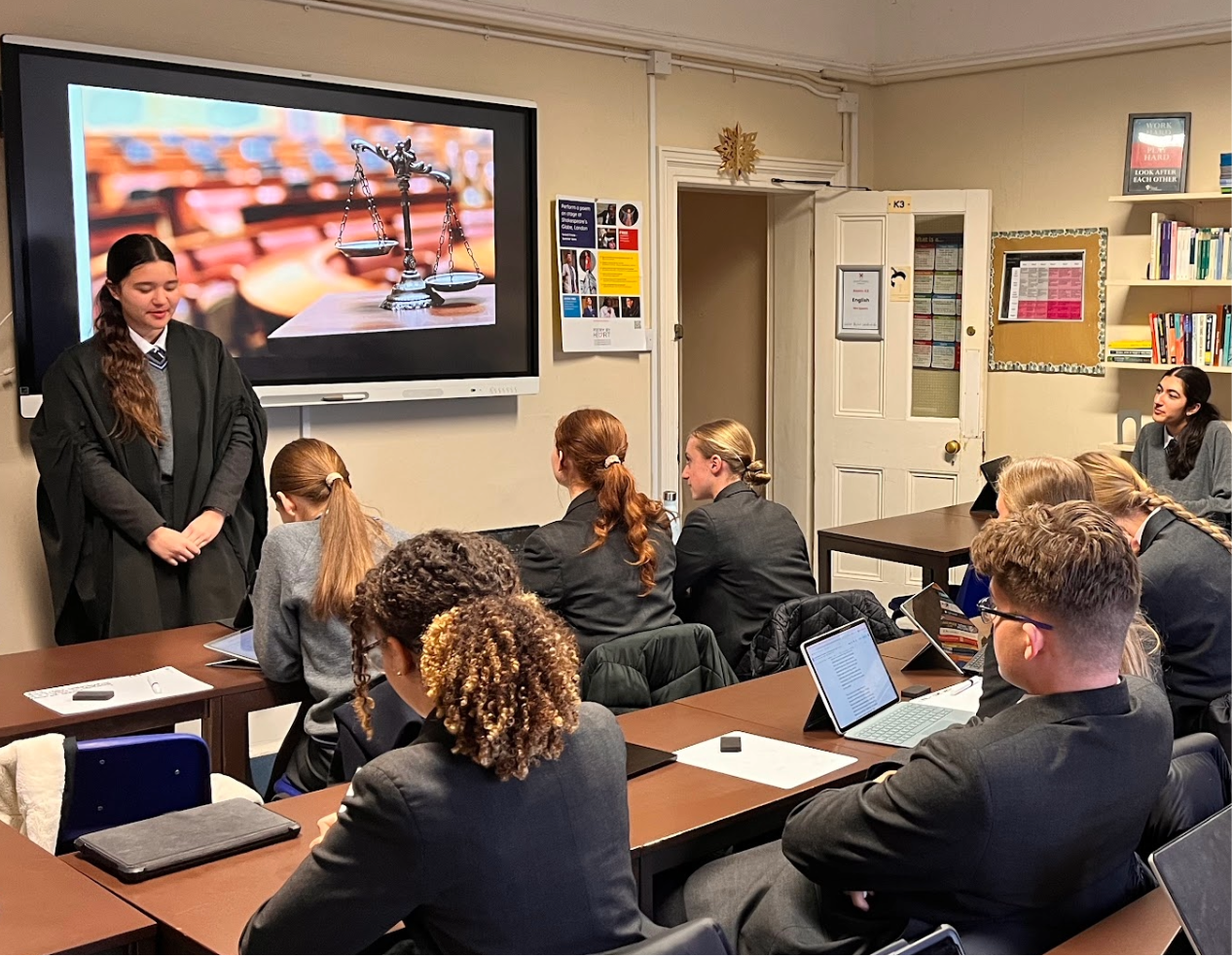
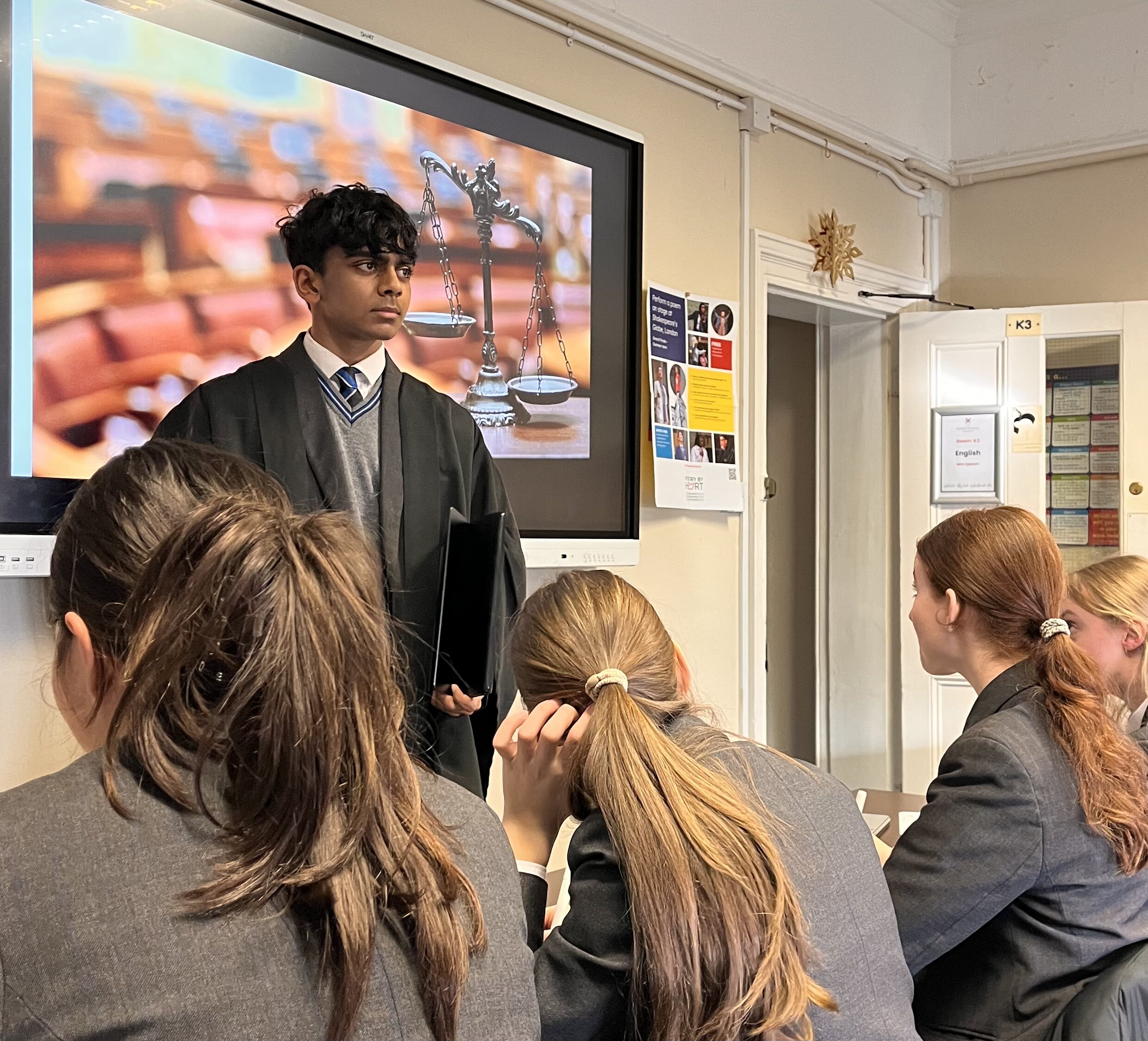
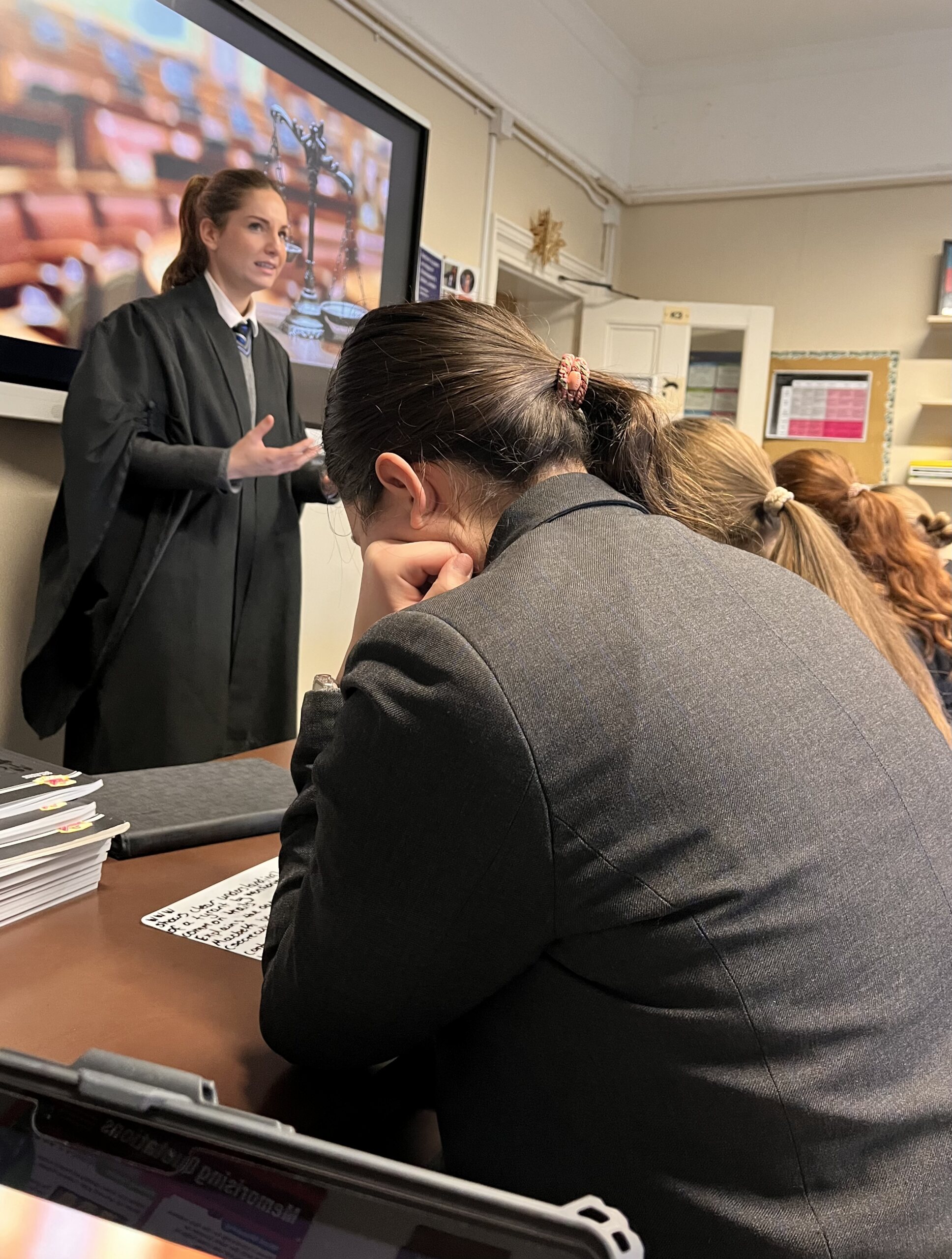
This week in English, Lower Fifth stepped into the courtroom to put Macbeth on trial.
Pupils took on the role of prosecution lawyers, delivering a formal closing statement arguing that Macbeth had already become a tyrant by the end of Act 3 – before Banquo’s ghost ever appears. Rather than retelling the story, they built a persuasive case, using carefully selected quotations, tracking Macbeth’s moral decline and explaining how secrecy, manipulation and violence signal a dangerous ruler.
The task challenged pupils to think like critics and advocates: weighing evidence, analysing language and considering the consequences of power. It also prepares them brilliantly for the next stage of the play, where Macbeth’s inner instability becomes public. And who knows – it may even have showcased barristers of the future!
A demanding, creative and highly engaging way to bring Shakespeare to life… and the courtroom was in full session.

Related Posts
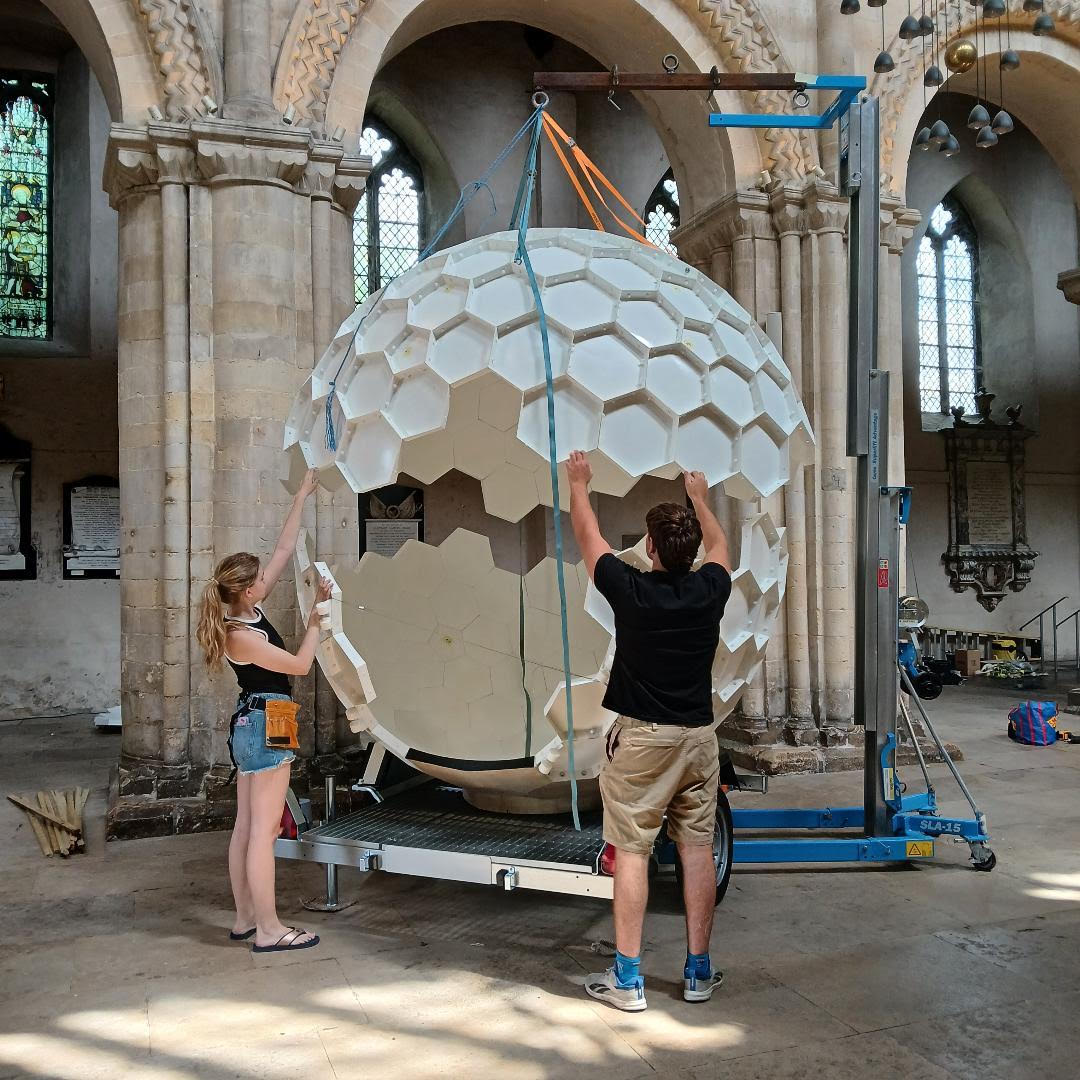
Upper Sixth student Reuben D has played a vital role in bringing a major new artwork to life at Rochester Cathedral, earning high praise from local artist Matthew Darbyshire for his extraordinary commitment and hard work throughout the project. Reuben assisted Darbyshire in constructing White on White, an ambitious sculpture commissioned by Rochester Cathedral [...]
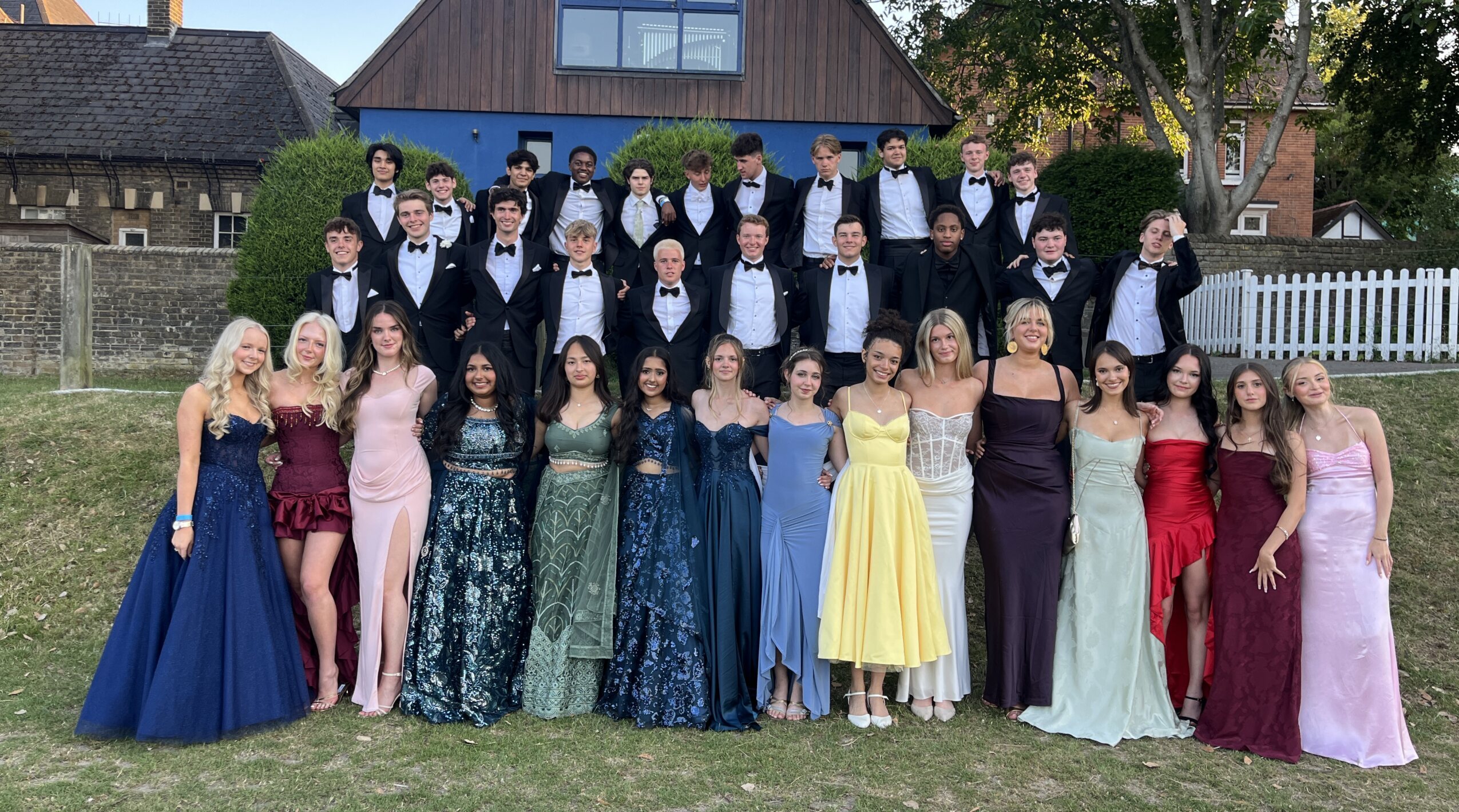
The Paddock was transformed into a spectacular venue for this year’s Summer Ball, with the Cathedral and castle providing the perfect backdrop. Guests gathered in a beautifully decorated marquee to celebrate the end of the academic year, bringing together parents, staff and Upper Sixth leavers for an unforgettable night. The atmosphere was fantastic, with [...]
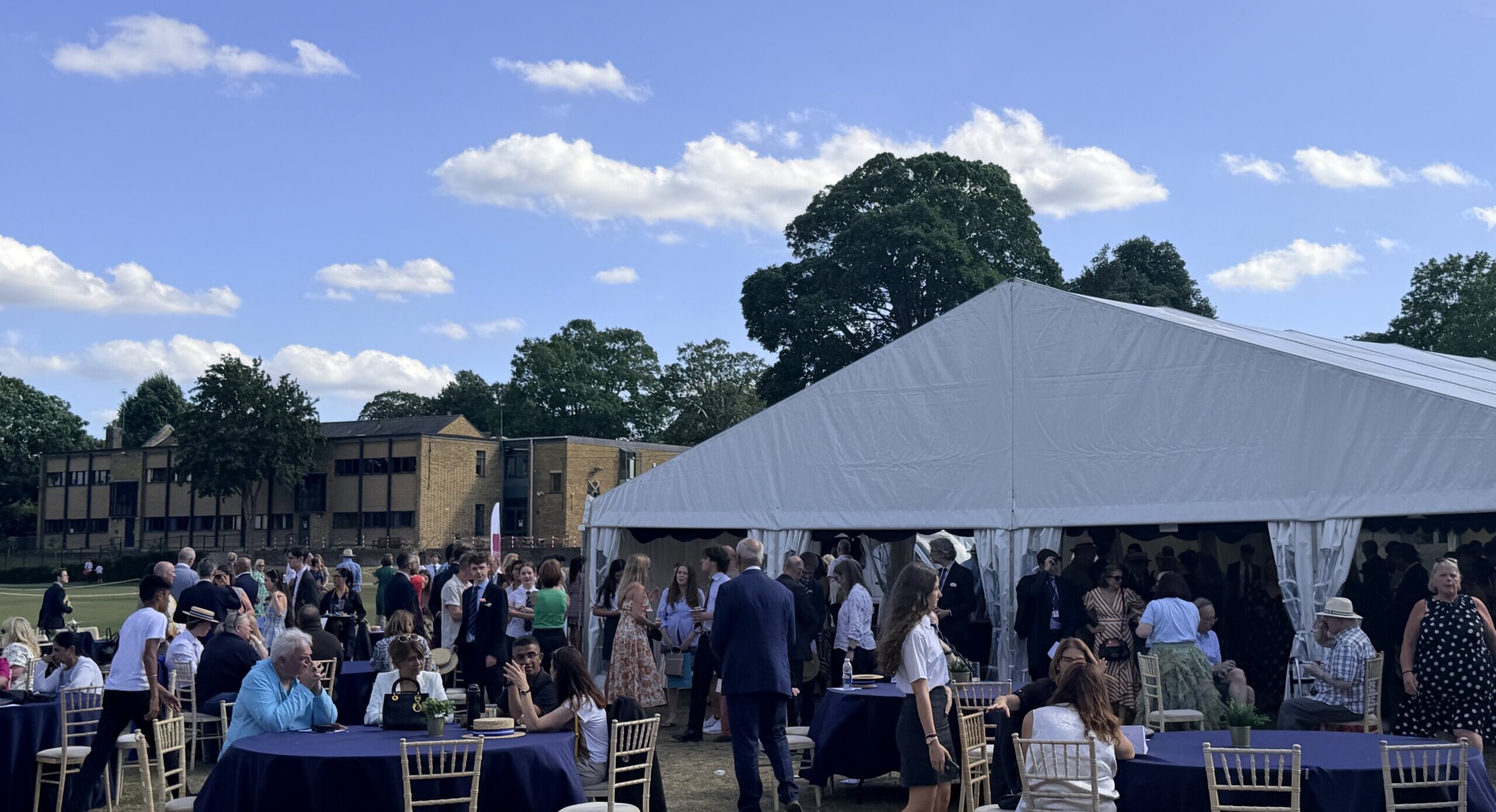
The historic nave of Rochester Cathedral provided a magnificent backdrop for this year’s Speech Day and Prize Giving on Saturday, 4 July. The ceremony opened with the National Anthem, followed by an address from Mr John Maas, Chair of Governors, who reflected on the School’s continued growth and future strategic direction. Head of School [...]